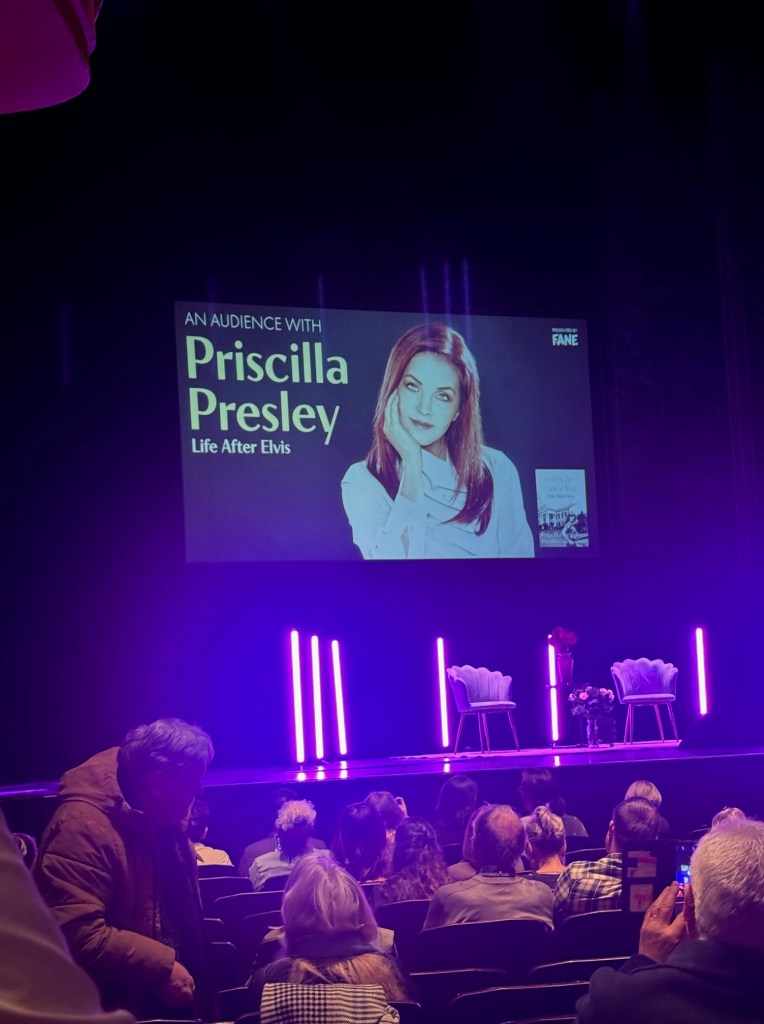
Where: Prince Edward Theatre, London
When: 28th September 2025
Stars: 5
There are times in the theatre when you settle into your seat expecting the usual – a script, a cast, some careful choreography – and then there are times like this. An Audience with Priscilla Presley: Life After Elvis at the Prince Edward isn’t a play and it’s not a musical, but it has its own kind of drama. The curtain doesn’t rise; instead, Priscilla Presley herself steps into the light, carrying nothing more than her presence and a lifetime of stories that most of us only know through headlines.
From the first moment she speaks, the room changes – there’s no rush, no need to overplay. She talks with a steady calm, the sort that comes from decades of public life, but within that composure is something unexpectedly intimate. The stories move between memory and reflection – moments of humour, flashes of surprise, small details that turn a legend back into a person. You hear not just about Elvis but about her own path, her resilience, her work, her family, her place in the long shadow of fame and how she found her own space beyond it.
The theatre, usually a space for fiction, becomes something closer to a conversation. The staging is pared back to the essentials: a chair, a backdrop, a voice that doesn’t need amplification beyond the microphone. It’s simple, but it works, because what you’ve come for is not spectacle but perspective. Even in a venue as grand as the Prince Edward, the atmosphere feels surprisingly close, as though you’ve been invited to listen in rather than simply watch.
What gives the evening its strength is the mix of tones. There is warmth and humour – moments when Priscilla shares a line and the audience laughs together, not at her expense but with the sense of being included in a memory. And then there is reflection, when she slows down and lets silence carry the weight. The combination is powerful. Comedy doesn’t undercut the seriousness; instead, it draws you in, lulls you, and makes the more reflective moments hit even harder.
By the end, you realise you haven’t been given a list of facts or a retelling of familiar history. You’ve been shown what it feels like to live inside a story that the world thinks it already knows. What lingers isn’t scandal or nostalgia, but the resilience of a woman who has found her own way to tell it.
 These Theatre Thoughts - Theatre Reviews & News
Leave a comment