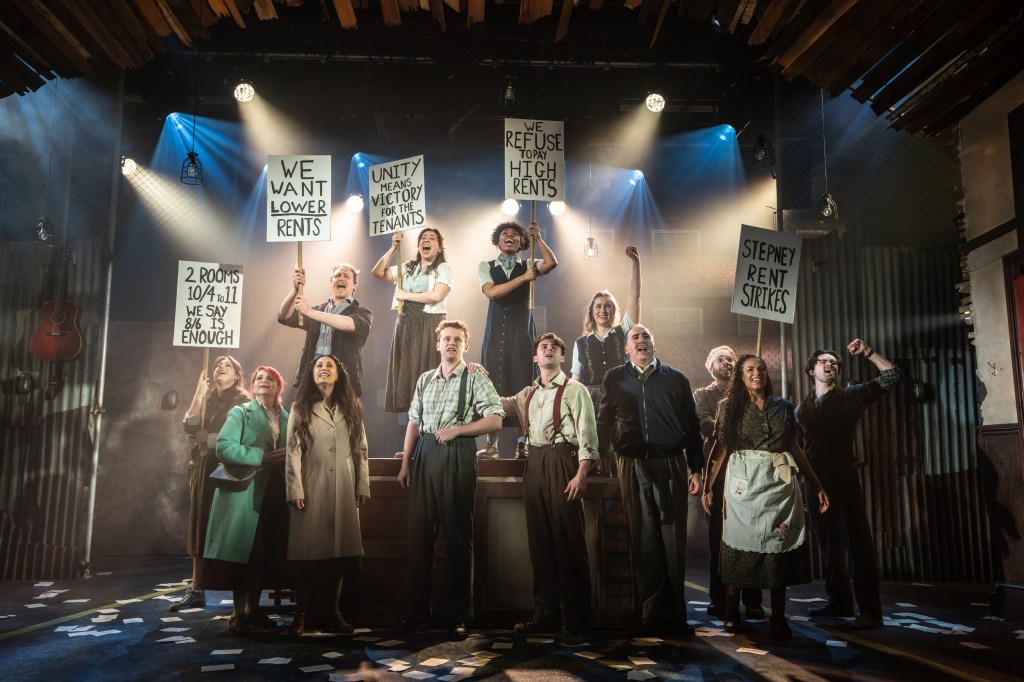
Date: 26th January 2026
Stars: 2
There’s something genuinely admirable about Cable Street. It’s trying to turn a moment of collective courage into a piece of musical theatre, and that’s not an easy thing to do without slipping into either sentimentality or sloganeering. When it first appeared at Southwark Playhouse, its roughness felt forgivable, even exciting — a new show testing its ideas in front of an audience. Two years on, though, those rough edges haven’t been smoothed. If anything, they’ve frayed.
The story remains a strong one. Set around the Battle of Cable Street in 1936, the musical follows three young people — Mairead, Sammy and Ron — whose lives and politics pull them in different directions as fascism rises in the East End. In this production, Lizzy-Rose Esin-Kelly plays Mairead with a grounded sincerity, Isaac Gryn brings warmth and charm to Sammy, and Barney Wilkinson gives Ron an uneasy likability that makes his political choices feel more unsettling than cartoonish. Their central triangle is still the show’s best dramatic engine, and when the writing trusts those relationships, the piece briefly feels powerful.
The problem is how often it doesn’t. The revised score by Tim Gilvin leans heavily into explanation, with new songs that feel designed to make sure no one misses the point. Rather than letting scenes and relationships speak for themselves, lyrics frequently step in to underline motivations, politics and themes. It’s the musical equivalent of highlighting a sentence in neon yellow, and after a while, it becomes exhausting. Where earlier versions allowed moments of subtlety, this one often chooses clarity at the expense of drama.
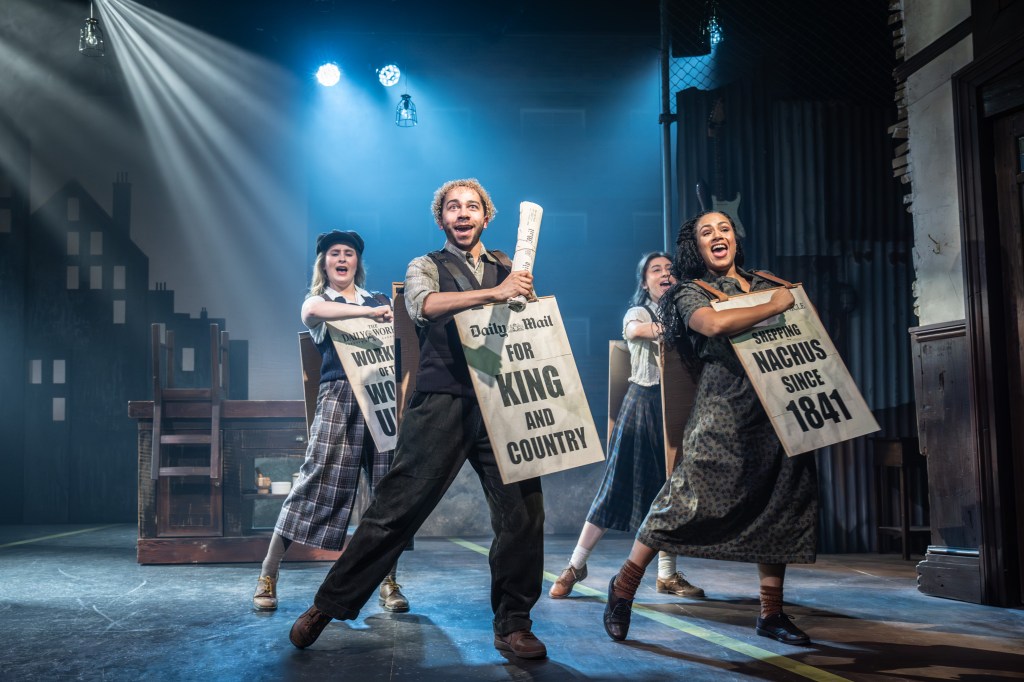
There are moments where Cable Street seems to be reaching for the kind of tonal juggling act that Operation Mincemeat pulls off so effortlessly, but without quite understanding why it works there. The Blackshirts’ boyband-style number is the clearest example, feeling like a direct nod to Das Übermensch, but landing more as pastiche than satire. In Mincemeat, that kind of musical comedy undercuts extremism with precision and purpose; here, it risks softening the threat rather than exposing it. The result is a sequence that feels oddly light for the subject matter, and a reminder that parody needs a very steady hand when the history underneath is this serious.
Length is another issue. The show feels stretched beyond its natural shape, with scenes that repeat emotional beats and songs that restate ideas already made clear. The second half, in particular, struggles with momentum. The battle itself arrives, and instead of the aftermath tightening into something focused, the narrative continues to sprawl, tying up threads that might have been more effective left open.
The framing device of the present-day walking tour through the East End remains one of the most distracting elements of the piece, and time has not been kind to it. What might have been intended as a bridge between past and present instead feels like an interruption, pulling focus away from the far more compelling 1930s narrative. The modern characters exist largely to explain what we’re already seeing, offering commentary that feels redundant and, at times, clunky. Rather than deepening the historical story, the device keeps stopping it in its tracks, creating a jarring rhythm that breaks the emotional momentum just when the show most needs to stay with its central characters.
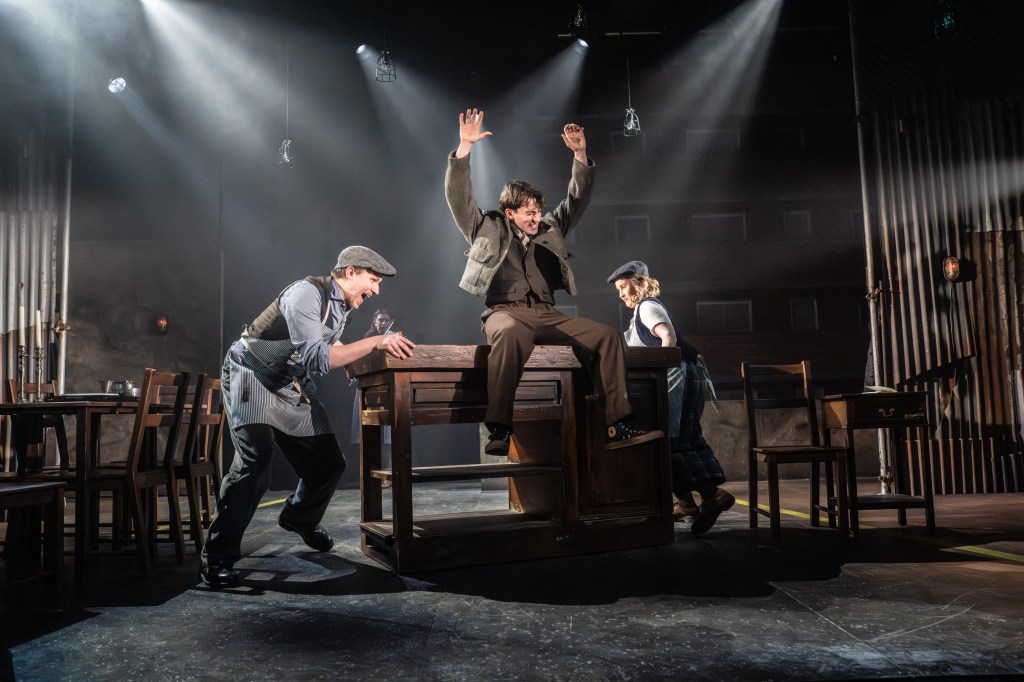
Direction by Adam Lenson and choreography from Jevan Howard-Jones still find strong images in the crowd scenes, and the design team do good work conjuring the East End without drowning in period detail. But even here, the production sometimes feels like it is pointing at its own significance rather than trusting the audience to find it. Lighting and sound underline every emotional turn, which, paired with the explanatory lyrics, leaves little room for interpretation.
That’s the frustration. Cable Street tells an important story, and it has a strong cast and a solid musical foundation. But where it once felt like a promising, slightly messy new voice, it now feels overly eager to be understood, to be agreed with, to be applauded for its message. In the process, it loses some of the complexity and tension that made the original premise so compelling.
Two years on, it still feels like a show with potential. It just feels like one that’s talking over itself.
Cable Street plays at Marylebone Theatre until 28th February 2026 and tickets are availalbe here: https://www.marylebonetheatre.com/productions/cable-street
 These Theatre Thoughts - Theatre Reviews & News
Leave a comment