Date: 27/01/26
Stars: 3
Mrs President is an odd, thoughtful, sometimes frustrating piece of theatre. It’s not interested in walking you through Mary Lincoln’s life, or even particularly in explaining it. Instead, it drops you into the aftermath, when everything has already gone wrong, and asks a question: who do you become when history has already decided who you are?
The action takes place in Mathew Brady’s photography studio, with Mary sitting for a portrait that will help define how she is remembered. Brady, of course, is one of the great image-makers of the American Civil War. It’s a clever reminder that photography, like history, is never neutral – it’s curated, staged, and sometimes downright theatrical.
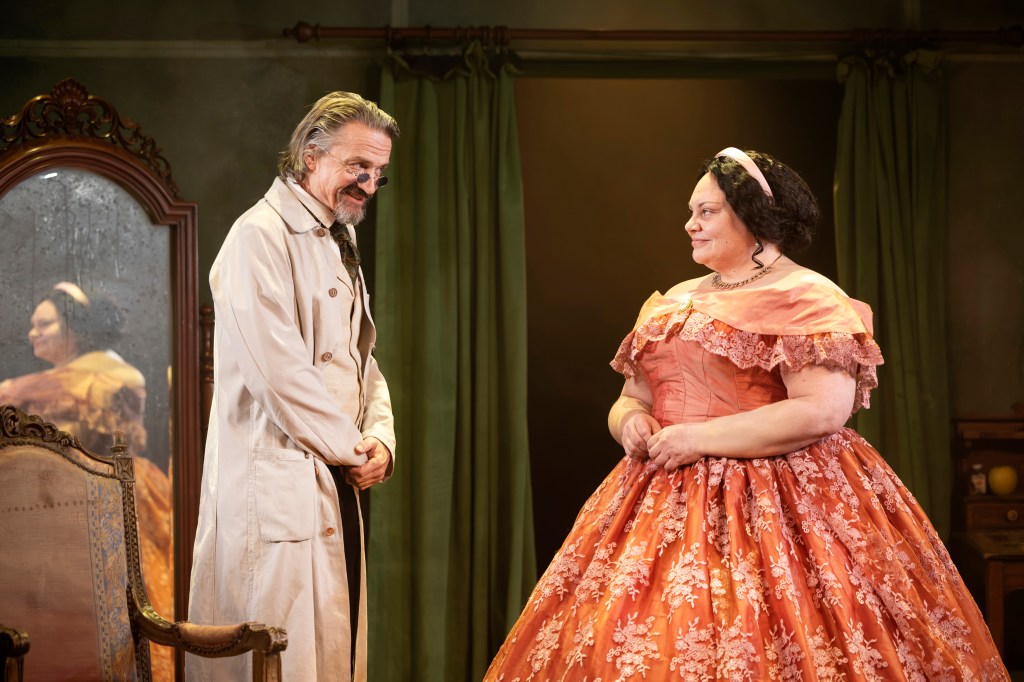
Bronagh Lagan’s direction works with that idea; the stage is dominated by a huge picture frame, so Mary is literally boxed inside an image for much of the play. It’s not subtle, but it’s effective. And the structure is fractured, slipping between memories, arguments and reflections, and it often feels like you’re inside Mary’s head rather than following a tidy narrative. Sometimes that works beautifully. Sometimes it just feels a bit confusing.
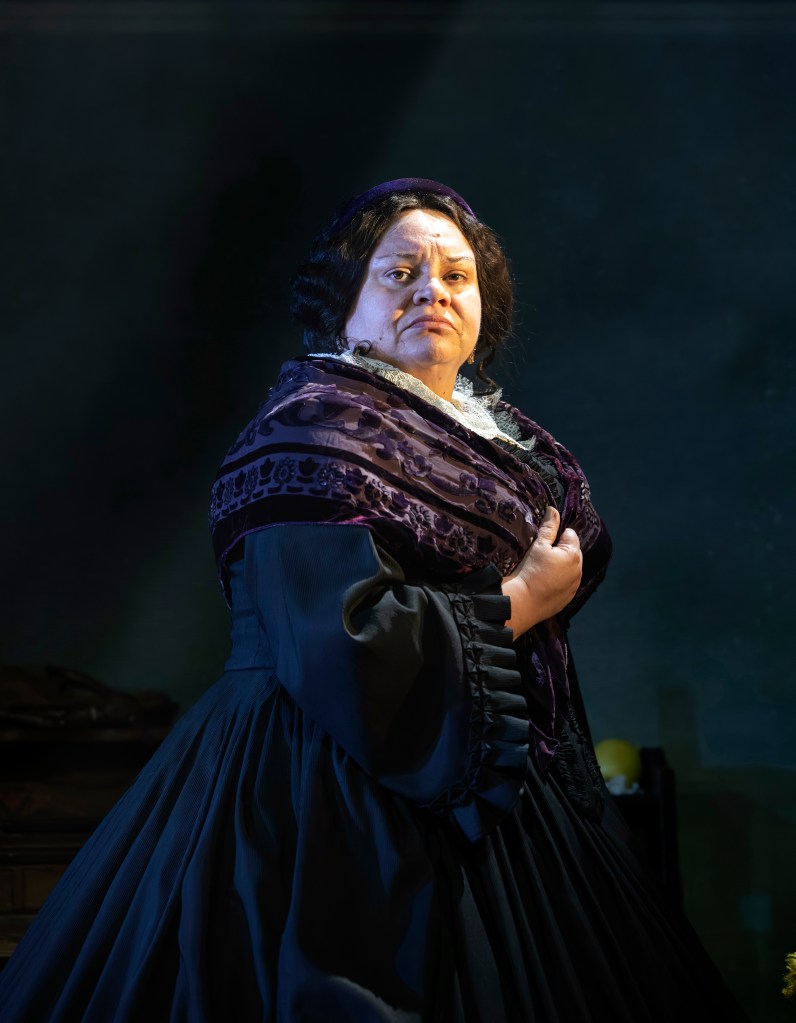
Keala Settle is the reason to see this. She plays Mary with a mix of grief, pride and a very human kind of stubbornness. Her insistence on being called “Mrs President” is one of the play’s most telling details – less a power grab, more a way of clinging to something. This is a much quieter performance than people might expect from Settle, and it’s all the better for that. She makes Mary brittle and difficult and sympathetic all at once.
Hal Fowler’s Brady is cooler, more measured, and that contrast works well; he’s not a moustache-twirling villain, but he is clearly aware of the power he holds. Their scenes together feel like negotiations, sometimes collaborations, sometimes interrogations, and often something in between. It’s a smart dynamic, and when the play focuses on that, it’s genuinely gripping.
Visually, the production is strong. Projections by Matt Powell are used to layer imagery and photographs onto the stage, and the photographic transitions are particularly striking. Derek Anderson’s lighting moves between harsh exposure and softer, private moments, which mirrors the tension between public image and private grief. The studio set and period costumes keep everything properly in the 19th century, even when the storytelling becomes more abstract.
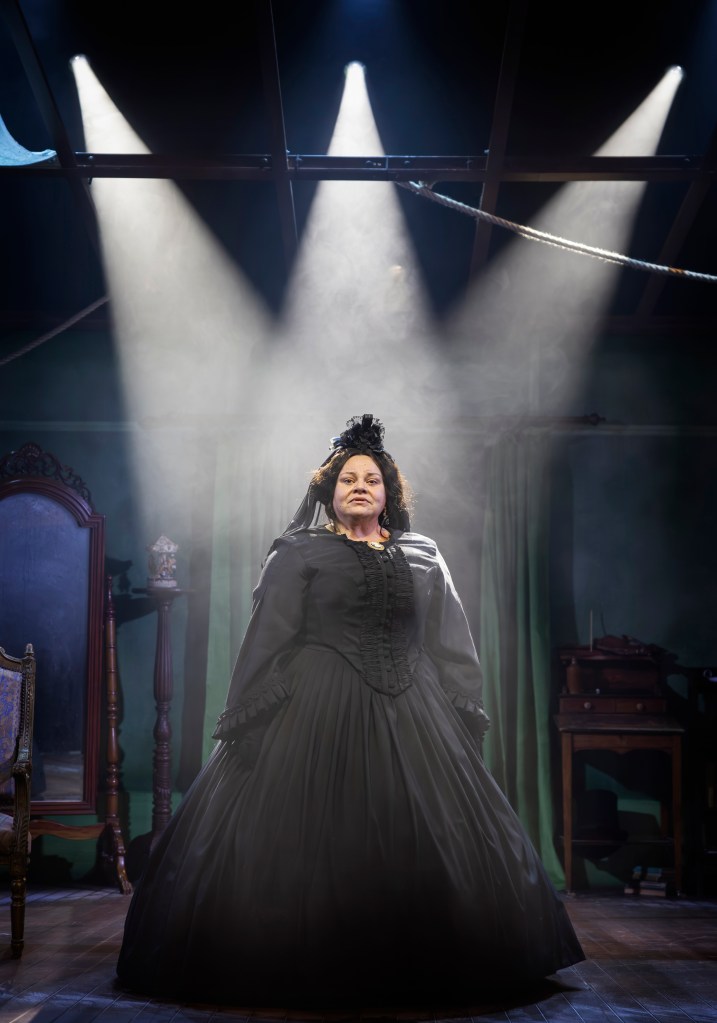
Where the play falters is in how much it wants to do. It touches on women’s agency, mental health, reputation, grief, historical myth-making, and legacy, but it doesn’t always stay with any of those ideas for long. Some metaphors and theatrical devices feel more distracting than illuminating, and the fragmented timeline can be confusing if you’re not already familiar with Mary Lincoln’s story. At times, it feels like the play is circling something profound but never quite stopping to unpack it.
Still, there’s something affecting about it. It’s less a biography and more an impression: a woman trying to rebuild herself in the glare of history’s camera. When it goes with that, Mrs President is strange, thoughtful and visually elegant. When it reaches too far, it becomes a little scattered. But Settle’s performance and the production’s visual language give it a real emotional pull.
Mrs President plays at Charing Cross Theatre until 8th March, and you can get tickets here: https://charingcrosstheatre.co.uk/theatre/mrs-president-2026
 These Theatre Thoughts - Theatre Reviews & News
Leave a comment