Date: 13/03/26
Stars: 5
You spend quite a lot of this production wondering how on earth they’re doing it.
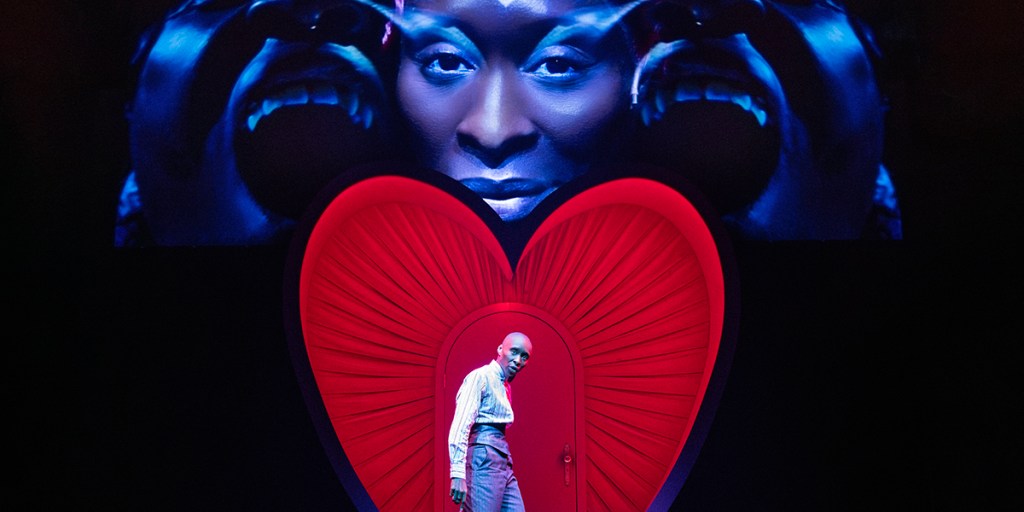
Not in a sceptical way, more in the way you watch a really good magic trick. You can see everything happening in front of you – the cameras, the screens, the actors moving around the stage – and yet the finished image feels almost impossible. One moment you’re watching Cynthia Erivo standing alone on stage, the next she’s sharing the scene with several versions of herself, each one a different character, each one completely convincing.
It shouldn’t work as well as it does, and yet somehow it does.
This new staging of Dracula at the Noël Coward Theatre, directed by Kip Williams, takes Bram Stoker’s novel and turns it into something that feels halfway between theatre and film. Cameras glide around the stage, scenes are filmed live and projected onto enormous screens, and Erivo moves between characters at astonishing speed, sometimes performing opposite herself, sometimes disappearing entirely into a role before you’ve even realised the switch has happened.
You can see the machinery of it all – the cameras, the costume changes, the choreography behind the scenes – but instead of breaking the illusion it somehow deepens it. Half the time you’re watching the stage, the other half you’re watching the screen – and somehow both feel completely real.
Cynthia Erivo, quite astonishingly, plays every role in the story. Not just Dracula, but Mina, Van Helsing, Jonathan Harker, Lucy and everyone in between. It’s an extraordinary feat of performance, not just technically but emotionally. Each character feels distinct, fully formed, never like a quick impersonation or theatrical trick.
She’s magnetic to watch, the sort of performer who seems to pull the audience in simply by stepping onto the stage.
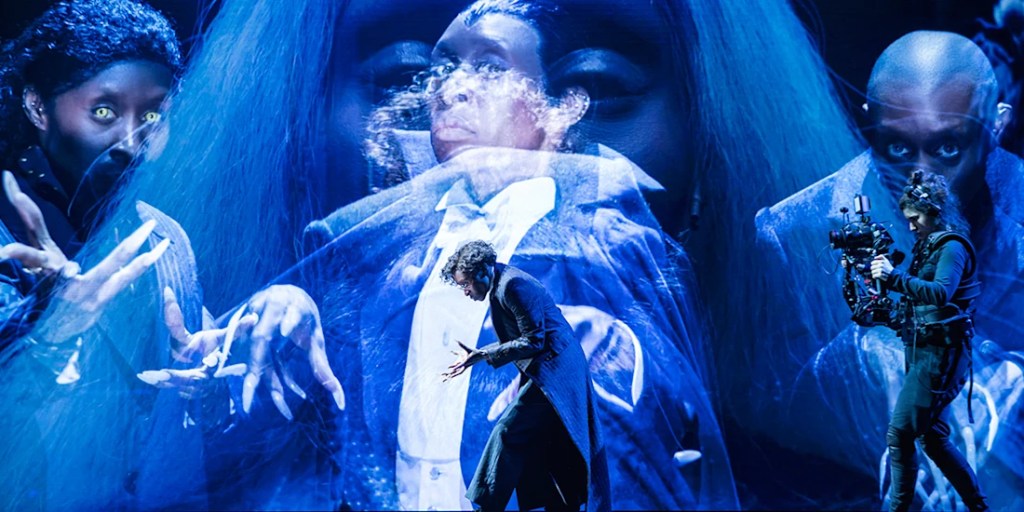
What’s particularly impressive is how easily she shifts between the characters. One moment she’s Mina, thoughtful and grounded. The next she’s the unsettling presence of Dracula himself. The transitions are so quick, and so precise, that after a while you stop thinking about the logistics of it and simply accept the world the production is creating. It’s less like watching one actor play many roles and more like watching a whole cast appear out of thin air.
The technology is the real revelation here. Theatre productions often use video projections now, but this feels different. The cameras don’t just decorate the staging – they are the staging. They create the story’s perspective, taking the audience between intimate close-ups and the physical reality of the stage in a way that feels genuinely cinematic. And yet it never stops being theatre.
That balance is what makes the whole thing so thrilling to watch. You’re aware of the craft, aware of the choreography happening around you, but instead of distracting from the story it becomes part of the excitement.
The structure of the piece also stays close to Bram Stoker’s original novel, with its diary entries and letters slowly piecing together the events surrounding Dracula. That format adds an eerie sense of distance to the storytelling, as though we’re watching a mystery unfold through fragments of memory. By the time the story reaches its darker turns, the atmosphere has thickened beautifully. What began as something almost playful in its technical ingenuity gradually becomes far more sinister.
And through it all, Erivo remains utterly captivating.
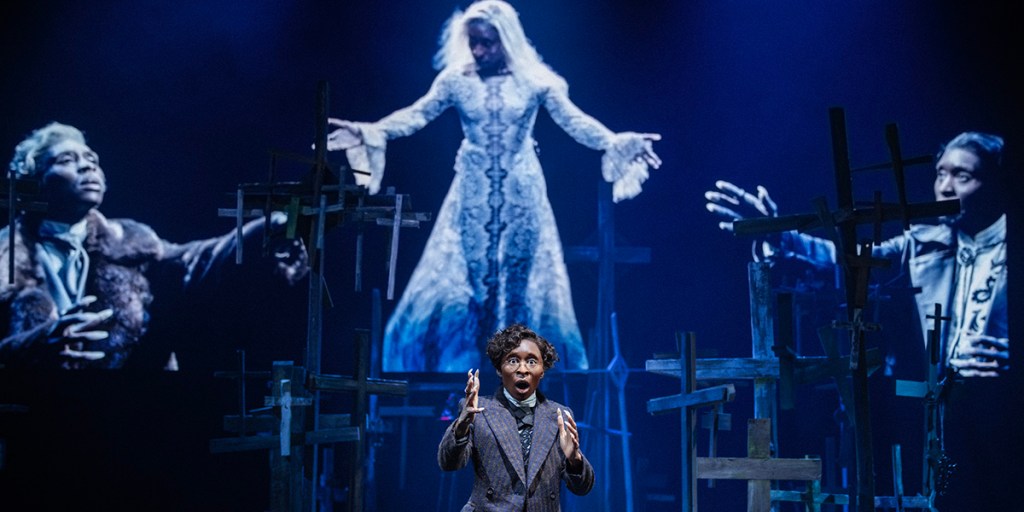
There are productions where the technology overwhelms the acting. This isn’t one of them. Here, the staging and the performance work in perfect partnership; the cameras amplify the acting rather than replacing it, allowing Erivo to create characters that feel both theatrical and intensely personal.
By the end, what lingers isn’t just the spectacle of it all – although that alone would be impressive enough – it’s the feeling that you’ve watched something genuinely inventive. A production that takes a story everyone knows and finds an entirely new way of telling it.
You leave the theatre slightly stunned, still trying to work out how they pulled it off.
 These Theatre Thoughts - Theatre Reviews & News
Leave a comment