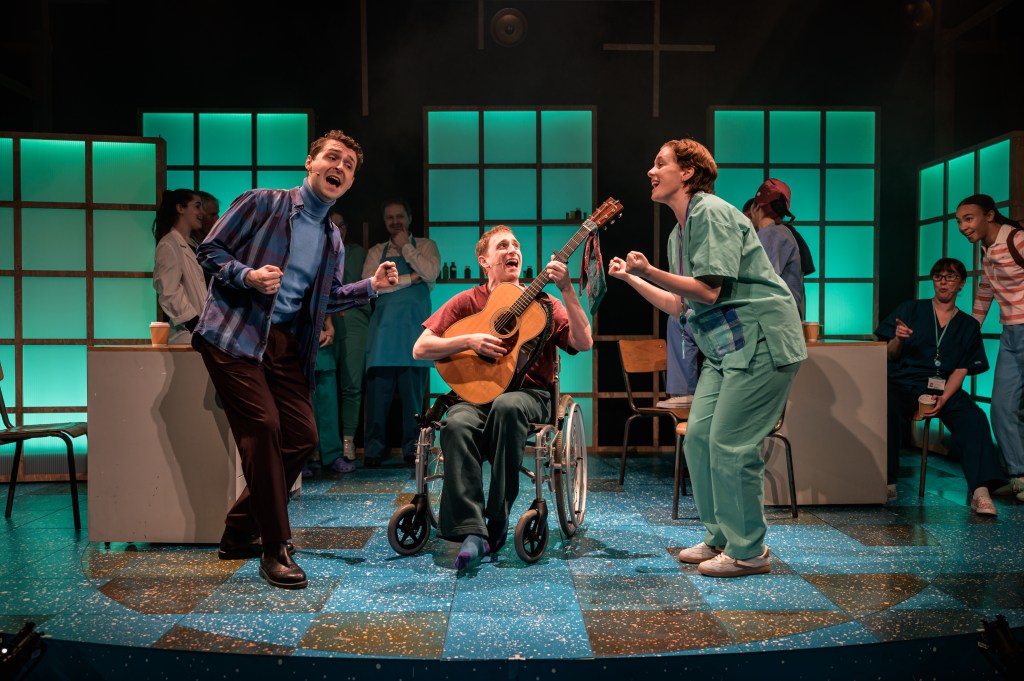
Date: 02/04/26
Stars: 2
I really wanted to like Lifeline more than I did… after all, the subject matter is clearly important, and it’s definitely coming from a place of genuine care and concern, and that does make it harder to be critical. A musical about antimicrobial resistance and people working in microbiology isn’t an obvious choice as a crowd-pleaser, but it’s a worthwhile idea, nonetheless, and you can feel the sincerity behind it from the start. But the problem is, I just found myself admiring its goals rather than actually enjoying the show.
The book by Becky Hope-Palmer links two timelines 75 years apart, moving between the discovery of penicillin by Alexander Fleming and a present-day NHS hospital storyline, and that’s a strong concept, but the way it’s set out makes it very busy – you’re switching between past and present, and the Fleming scenes themselves aren’t linear, so it can take a while to get your bearings (there is a screen telling you where and when you are, but it’s high up above the stage, and I didn’t actually see it until a while into the show). At one point, I didn’t even realise a character had died until well after it had happened, which totally blunted what should have been the most emotional moment of the story.
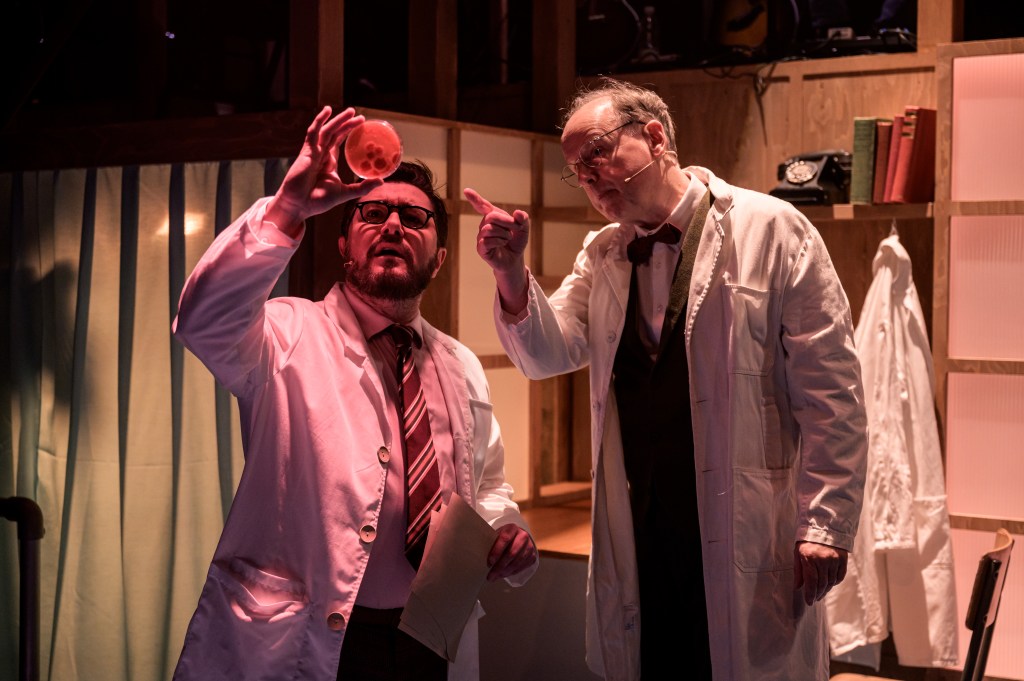
Interestingly, the Fleming-era scenes were the ones I found the most engaging – they felt clearer, more focused, and I kept wanting to stay in that world a little longer. There’s just something about that part of the story that allows the characters to be more than two-dimensional, and I couldn’t help thinking that giving that element more time and depth would have strengthened the show overall.
The music and lyrics by Robin Hiley suit the tone, sounding like a Scottish folk soundtrack, although I couldn’t really tell the different songs apart most of the time, and some more variation would have helped the important story points stand out more. And it did often come off as quite on the nose, with messages being spelled out rather than hinted at; the symbolism can be too literal. There’s even a moment where characters are literally tied up in red tape, which gets the idea across, but in a way that feels a bit obvious.
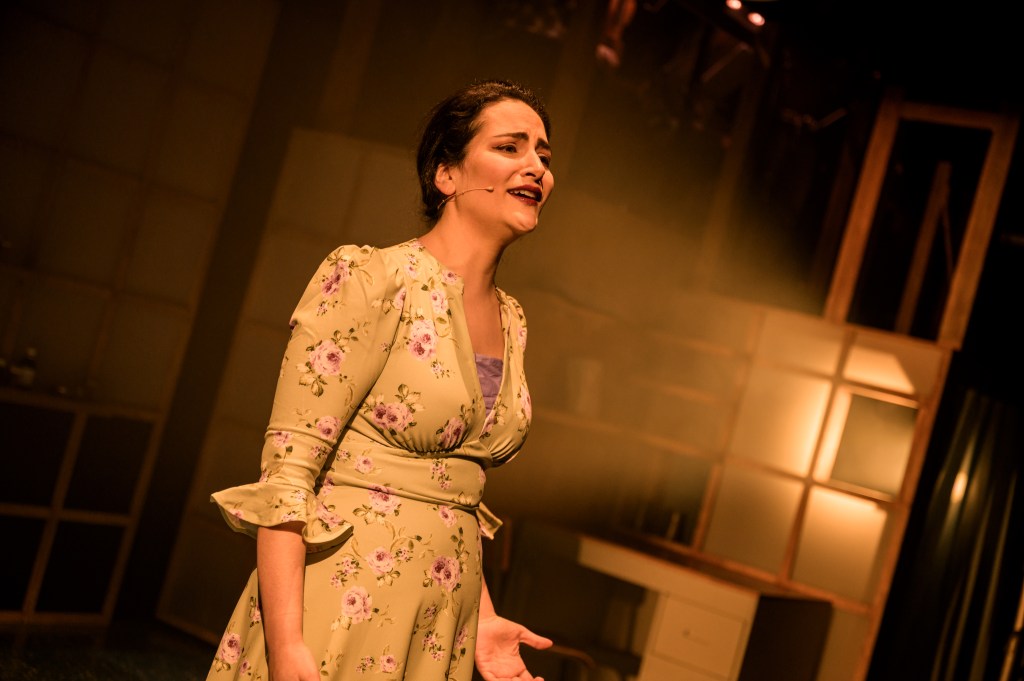
There are strong performances throughout, though, and Kelly Glyptis as Amalia Voureka really stands out. She brings warmth and a sense of reality to the role, and her scenes feel more emotionally true, which cuts through some of the busier storytelling. She’s funny when she needs to be, genuinely moving in other moments, and she’s the character I found myself wanting to see more of. Whenever she was on stage, the show seemed to feel more engaging.
The inclusion of real healthcare workers is a clever idea, and something that might have been just a gimmick actually works and reinforces the show’s purpose without feeling too forced – there’s a sense of sincerity that should have carried over into other scenes, but sadly didn’t. However, when the production really goes with that human element, it’s at its strongest.
At over two and a half hours, Lifeline does begin to feel long, and by the final stretch I was quite aware of the running time, thinking the finale was just around the corner only for another story strange to emerge. There’s a lot of marerial here, and tightening things up and focusing more clearly, especially on the Fleming strand, might have helped it work.
There’s a lot of heart in Lifeline, and the intentions are undeniably sincere, but I just kept wishing it trusted its most compelling elements a little more and allowed those to take centre stage.
Lifeline plays at Southwark Playhouse Elephant until 2nd May 2026, and tickets are available here: https://southwarkplayhouse.co.uk/productions/lifeline/
 These Theatre Thoughts - Theatre Reviews & News
Leave a comment