Date: 08/05/26
Stars: 4
As people are still finding their seats in Southwark Playhouse Borough’s The Little, there’s already someone on stage. A woman in a tracksuit, chain smoking, heavily pregnant, staring at her phone. It takes a second to realise she’s part of the play and not just someone wandering around before it starts, and that strange uncertainty sets the tone for everything that follows.
Because The Wasp keeps asking questions about choice, about consequence, about whether one tiny moment can set the course for everything that comes afterwards. And underneath all of that is the uncomfortable possibility that maybe there was never another path at all.
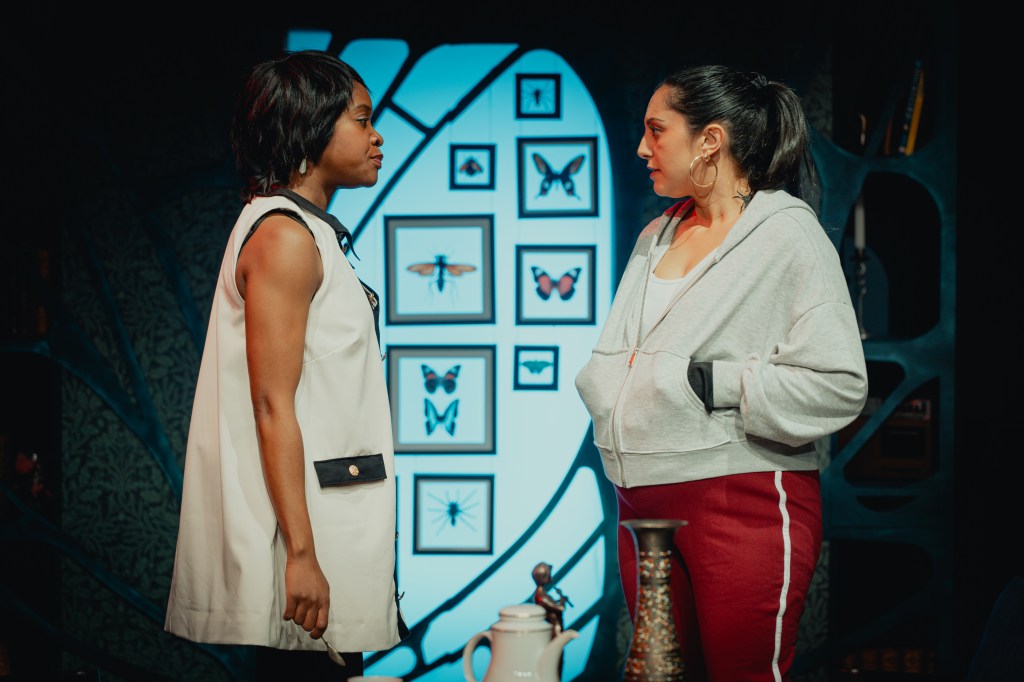
When the two women finally come together, it’s probably Heather you’ll side with first. Cassandra Hercules plays her with that polished middle-class ease – the “good” accent, the nice clothes, the talk of lattes and chamomile tea – while Serin Ibrahim’s Carla is pregnant, smoking, swearing, scrolling through her phone. The contrast is obvious straight away, almost too obvious, which is exactly why it works.
At first this just feels like an awkward reunion between two women who used to know each other at school and now have nothing in common. Then Heather offers Carla £30,000 to kill her husband, and suddenly you realise you’re not in the play you thought you were.
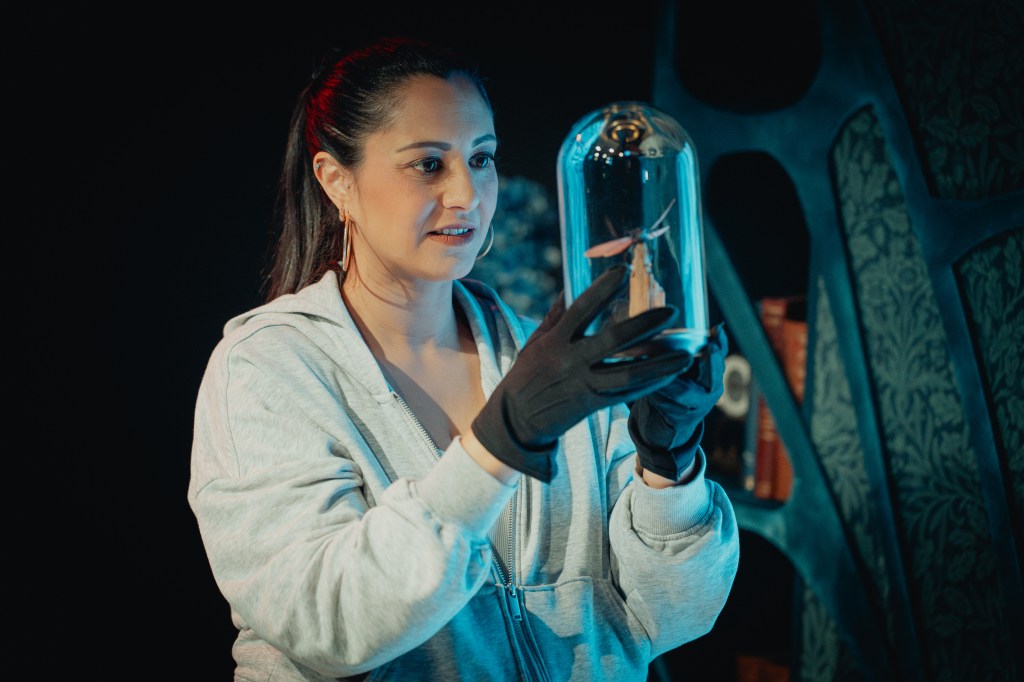
And from there, your loyalties keep shifting. Every new revelation changes the shape of things slightly, and by the second act it’s probably Carla you feel most sympathy for, although Morgan Lloyd Malcolm never really lets either woman become innocent. That’s part of what makes it interesting. The play keeps circling the idea that cruelty doesn’t appear out of nowhere, but it also refuses to excuse it. Can people actually change? Does a school bully ever really stop being one? And how often do we forget the damage we’ve done simply because it mattered more to someone else than it did to us?
The reunion itself feels very believable early on, largely because of the direction from James Haddrell. The women stay physically separate for a lot of the first act, moving around each other without properly connecting, occasionally drifting close enough to almost say something real before backing away again. Heather hides behind politeness and middle-class manners, Carla behind jokes and bravado, and you can feel both of them trying not to crack.
The uneasiness is there from the start as well, helped a lot by the lighting and sound design. Flickering lights and the sound of a wasp buzzing return whenever there’s a kind of crossroads moment, when one or other of the women could choose differently and maybe avoid what’s coming. One of the cleverest ideas is having the actors physically switch places and repeat lines from a different emotional angle, almost like the play is testing alternate realities in real time. Sometimes the same words suddenly sound warm, then threatening, then desperate. It doesn’t always land perfectly, and occasionally feels slightly clunky, but the idea behind it is really strong.
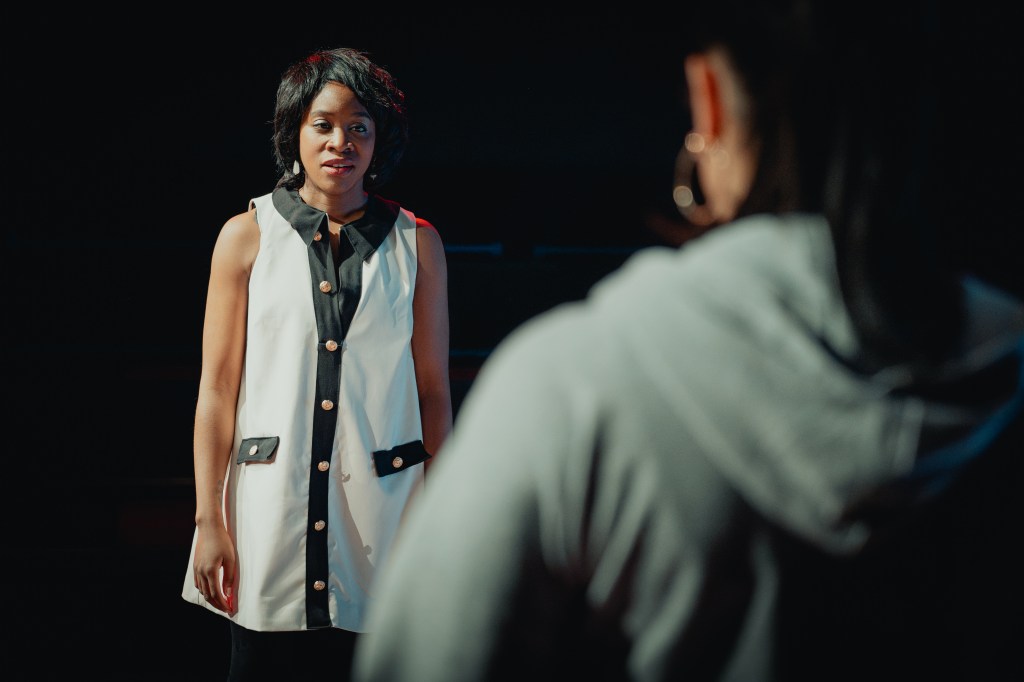
There’s humour running through it too, although not all of it entirely worked for me. Some laughs definitely felt intentional, but others came during moments that seemed genuinely dark or tragic, and I wasn’t always convinced that undercutting the tension helped. There were points where it felt like the audience wasn’t entirely sure whether they were supposed to laugh or not.
The writing itself changes quite a lot as well. Some scenes feel very naturalistic, particularly when the women are arguing or trying to dance around the truth, but later on there are longer monologues, mostly from Heather, where the style changes completely and starts to feel much more theatrical and deliberate. One speech in particular edges into almost talking at the audience rather than to Carla, spelling out themes the play had already made perfectly clear. That was probably my biggest issue with the second act. The ideas are strong enough without needing to underline them.
Still, what The Wasp does very well is slowly unravel the past. It’s interested in chain reactions, in how one small moment can keep echoing for decades without the person responsible even remembering it happened. Something huge to one person can barely register to someone else, and the play keeps returning to that imbalance over and over again.
The first act moves brilliantly, and even the scene change into act two is stylishly handled through music and lighting, although it does take a while. The second half drags more. Some of the monologues could definitely have been trimmed back, because every time it felt like the ending was arriving, there was another speech waiting around the corner.
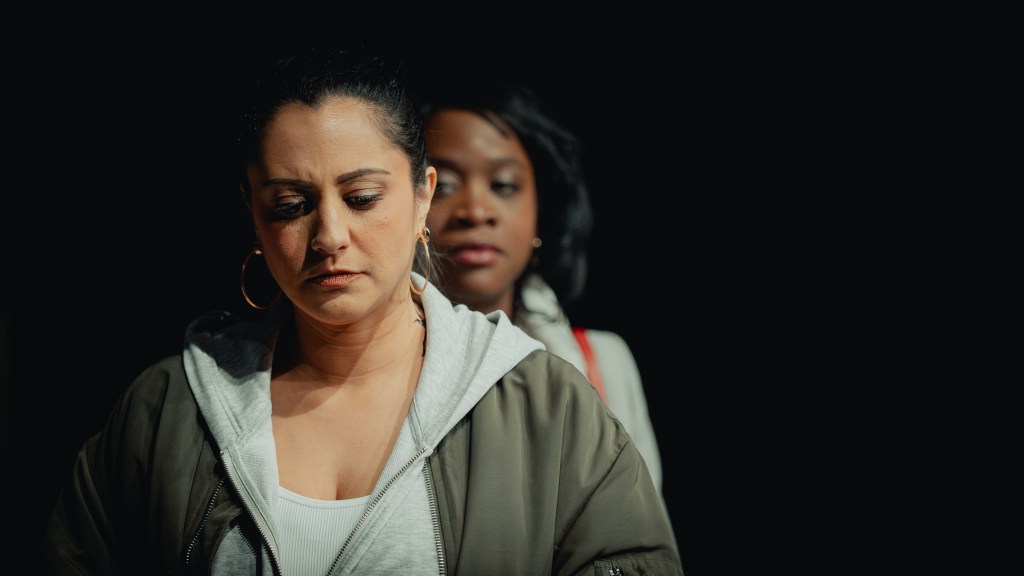
That ending, though, is very effective. I’d worked out the twist slightly earlier, but that didn’t really matter. What lands is the inevitability of it all, the sense that this revenge has been quietly growing for twenty years and was always going to end here, between these two women, at this exact moment. The final line is genuinely chilling once you realise how much has been happening underneath everything you’ve watched.
And it leaves you thinking about your own past in a slightly uncomfortable way. Something you said once in a school corridor or toilet or playground that you forgot about by the next lesson might still be living in somebody else’s head decades later.
That’s the sting in The Wasp. Not the twists. Not the threats. Just the idea that we might never really know the damage we’ve done.
The Wasp plays at Southwark Playhouse Borough until 30th May 2026, and you can get tickets here: https://southwarkplayhouse.co.uk/productions/the-wasp/


Leave a Reply