Date: 18/05/26
Stars: 5
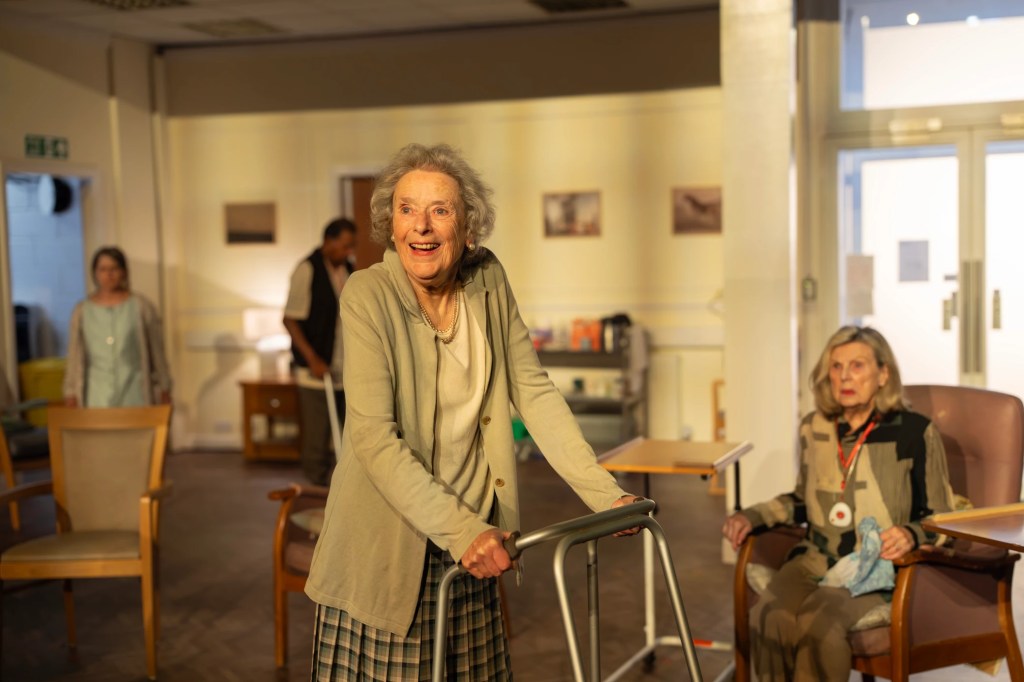
The first thing you see in Young Vic’s CARE is a semi-circle of wooden chairs in a brightly lit nursing home common room, and if you’ve ever had a relative in one of those spaces, there’s a good chance you feel something sink in your stomach before the play has even started. They’re exactly the right chairs. The lighting is exactly right as well, that strange brightness care homes always seem to have no matter the weather outside, practical and cheerful and slightly sad all at once. The set design from Rosanna Vize is so carefully observed that memories start appearing before any dialogue does.
And from there, Alexander Zeldin creates something that barely feels like theatre at all. It’s much closer to sitting quietly in the corner of a real place, watching people exist around one another. Conversations overlap, stories begin and disappear halfway through, somebody forgets what they were saying, somebody else carries on regardless. There are full stories, half stories, no stories, all competing with one another at once, and somehow that chaos feels completely natural. Then suddenly everything will go quiet, and those quieter moments are some of the most fragile in the entire production.

It’s a slow play. Deliberately slow. There’s no huge drama hanging over most of it, no sense that we’re racing towards some big theatrical reveal. Instead, little things unfold gradually. Routines repeat. Conversations circle back on themselves. Tea gets made. Someone gets confused. Someone gets tired. Like life, really.
And despite running for over two hours with no interval, it absolutely flew by. Like life, really.
One of the most impressive things about the production is how little anybody appears to be acting. Linda Bassett as Joan is extraordinary because she never pushes for sympathy. She simply exists in the space, vulnerable at times, funny at others, occasionally confused, occasionally completely sharp, and the audience becomes fiercely protective of her almost without realising it’s happened. You can feel the room soften around her as the play goes on.
But what’s clever is that the play slowly redirects some of that emotion towards Joan’s daughter as well. It would be very easy to make her into the villain of the piece, the daughter who “put her mother in a home”, but the production never allows things to become that simple. You feel desperately sad for her too, because what other choice did she really have? Love doesn’t magically create practical solutions. Eventually somebody has to make impossible decisions, and Care understands that every option comes with guilt attached to it.
That honesty is what makes the play so affecting.
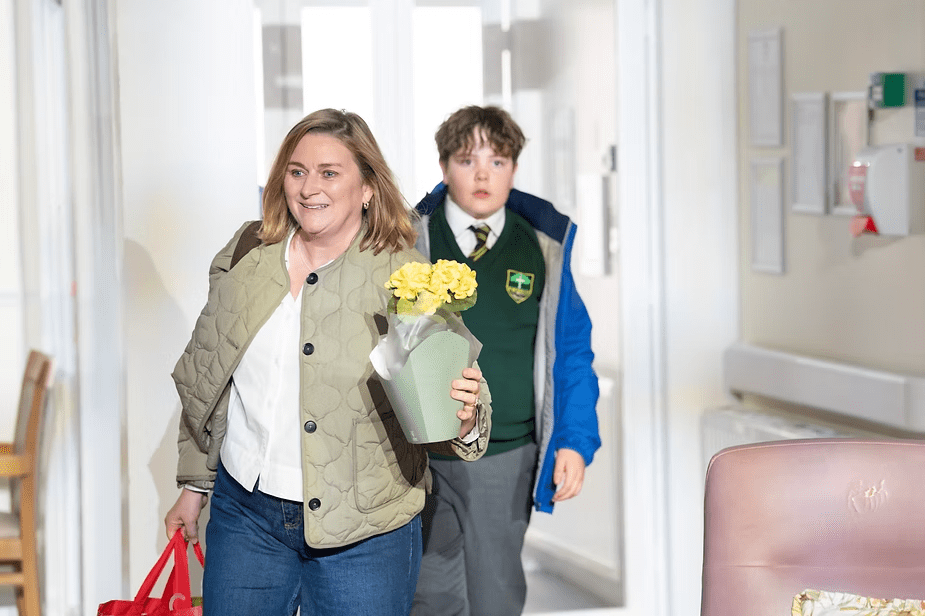
Llewella Gideon’s Hazel brings warmth and humour into the room without ever forcing it, while William Lawlor as Laurie captures something very specific about long-term love and exhaustion existing side by side. Nobody feels heightened or theatrical. It all feels oddly spontaneous, like the audience has simply wandered into these people’s lives for a while.
Underneath everything, the play is really about love, and how exhausting love can become when it stretches across years and illness and responsibility. Not because the love disappears, but because it doesn’t.
Even the anger works like that. Most of the time it stays hidden away, swallowed down in favour of patience and routine and trying to keep things calm, but when those flashes of frustration finally break through, they’re shocking precisely because the production has been so restrained elsewhere. And the audience reaction to those moments was fascinating — startled, definitely, but also deeply understanding. Nobody in the room seemed to judge the anger. They recognised it.
What Zeldin captures so well is the point where people slowly lose the ability to hide themselves properly anymore. Emotions slip through. Exhaustion slips through. Fear slips through. And because the production is so naturalistic, those moments land much harder than any big speech probably could.
There’s no grand message at the end of Care. No neat conclusion about the healthcare system or ageing or family responsibility. Instead, it leaves you sitting with something much more uncomfortable: the understanding that love is sometimes not enough to make a situation better, even when everybody involved is trying their best.
And somehow, that truth feels both devastating and oddly comforting at the same time.
CARE runs at The Young Vic until 11th July 2026, and tickets are available here: https://www.youngvic.org/whats-on/care


Leave a Reply